
DASH Flu A/B Test

DASH Flu A/B Test
The FDA-cleared, CLIA-waived DASH Flu A/B Test provides qualitative RT-PCR test results in 15 minutes at the point of care allowing you to test and treat with increased confidence in a single patient visit
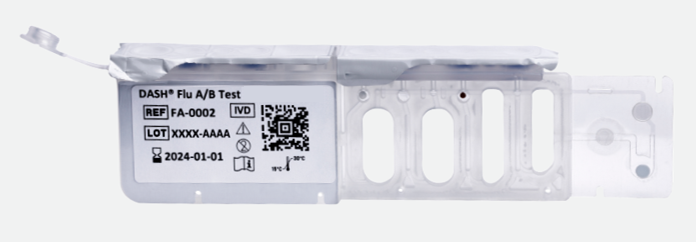
-

Reduce over- and under-treatment with 15-minute point-of-care PCR testing
-
Improve antimicrobial stewardship and HEDIS compliance
-
Test up to 30 specimens per 8-hour shift*
-
Eliminate empiric treatment with 15-minute point-of-care PCR testing
-
Anterior nasal swab sample collection rather than more invasive nasopharyngeal swabs
-
Self- and clinician-collected specimens
DASH Flu A/B Test Workflow
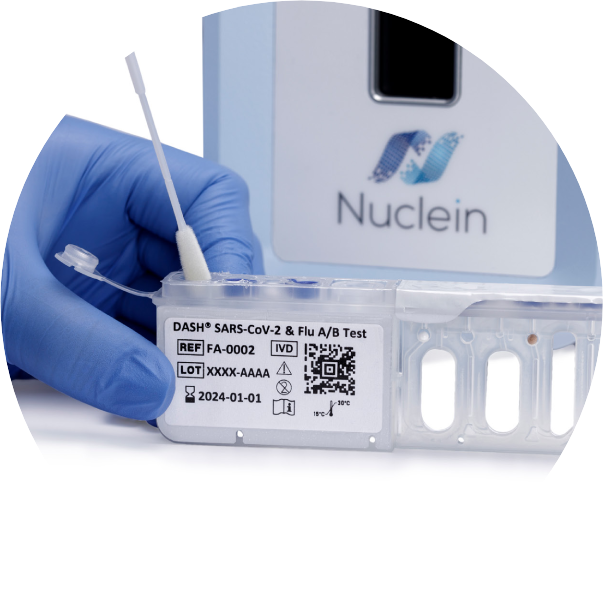 1
ADD
 2
SCAN
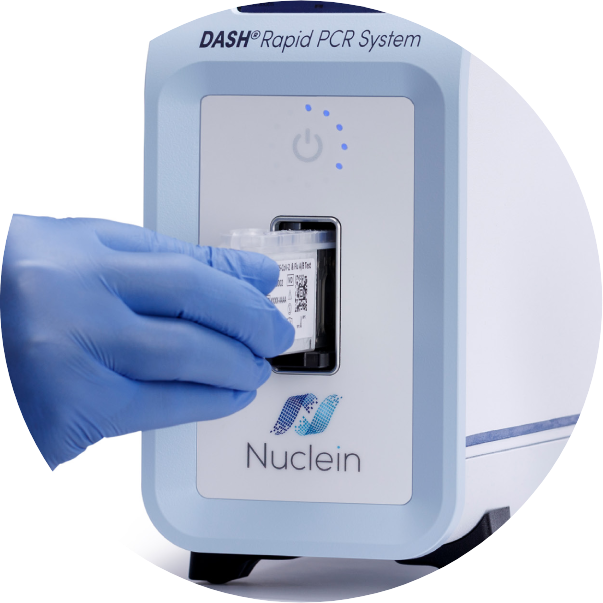 3
LOAD
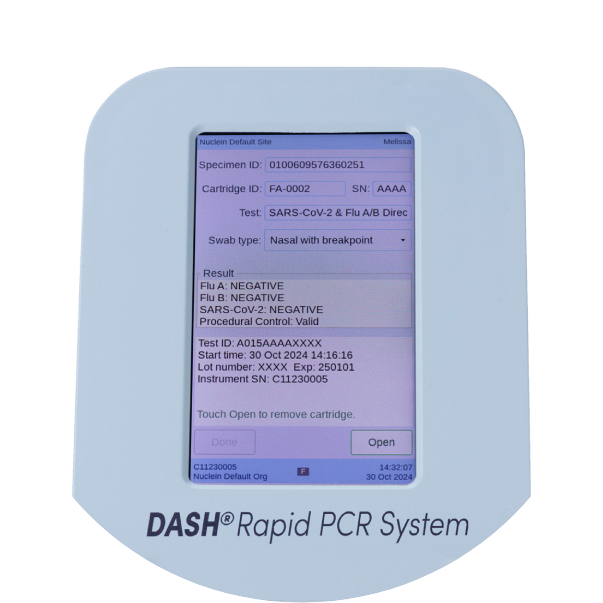 4
REPORT
Testing and treating in a single patient visit
 1
PATIENT ARRIVES
AND SAMPLE IS COLLECTED
 2
RUN DASH
FLU A/B TEST
 3
RESULTS
IN JUST
15 MINUTES
 4
CLINICIAN PRESENTS
RESULTS AND DISCUSSES
TREATMENT PLAN
Results from a prospective clinical study against an FDA-cleared PCR test
POSITIVE PERCENT AGREEMENT
(Sensitivity)
Flu A
94.3%
Flu B
97.3%
NEGATIVE PERCENT AGREEMENT
(Specificity)
Flu A
98.1%
Flu B
99.2%
Source: DASH Flu A/B Test package insert
Intended Use
The DASH Flu A/B Test is a rapid reverse transcription polymerase chain reaction (RT-PCR) assay performed on the DASH Rapid PCR Instrument and is intended for the simultaneous in vitro qualitative detection and differentiation of influenza A and influenza B virus ribonucleic acid (RNA) in anterior nasal swab specimens from patients with signs and symptoms of respiratory tract infection. The test is intended to aid in the differential diagnosis of influenza A, and influenza B in humans in conjunction with other clinical, epidemiologic and laboratory findings and is not intended to detect influenza C.
Positive results of a specific target are indicative of the presence of that viral RNA and may not be the definite cause of disease. Positive results do not rule out co-infection with other pathogens. Negative results do not preclude influenza infection and should not be used as the sole basis for diagnosis, treatment or other patient management decisions.
Performance characteristics for influenza A were established during the 2023-2024 influenza season when influenza A/H3 and A/H1N1 pandemic were the predominant influenza A viruses in circulation. When other influenza A viruses are emerging, performance characteristics may vary.
If infection with a novel influenza A virus is suspected based on current clinical and epidemiological screening criteria recommended by public health authorities, specimens should be collected with appropriate infection control precautions for novel virulent influenza viruses and sent to state or local health department for testing. Viral culture should not be attempted in these cases unless a BSL3+ facility is available to receive and culture specimens.